
About
Circular Office 2.0 explores how an existing structure can be transformed into a contemporary workplace while significantly reducing environmental impact. Designed by Gietermans & Van Dijk Architecten for Gerose VGO, the project builds upon an existing foundation and parking structure, demonstrating how reuse can become a starting point for architectural quality rather than a limitation. Frame+View developed a series of visualizations that helped communicate the design vision, compare alternatives, and make the future workplace experience tangible long before construction.
details
Client: Gerose VGO
Design: Gietermans & Van Dijk Architecten
Year: 2021
Scale: 3000 m²
Status: Under Construction
Services: 3D Modeling, 3D Imagery
Transforming an Existing Structure
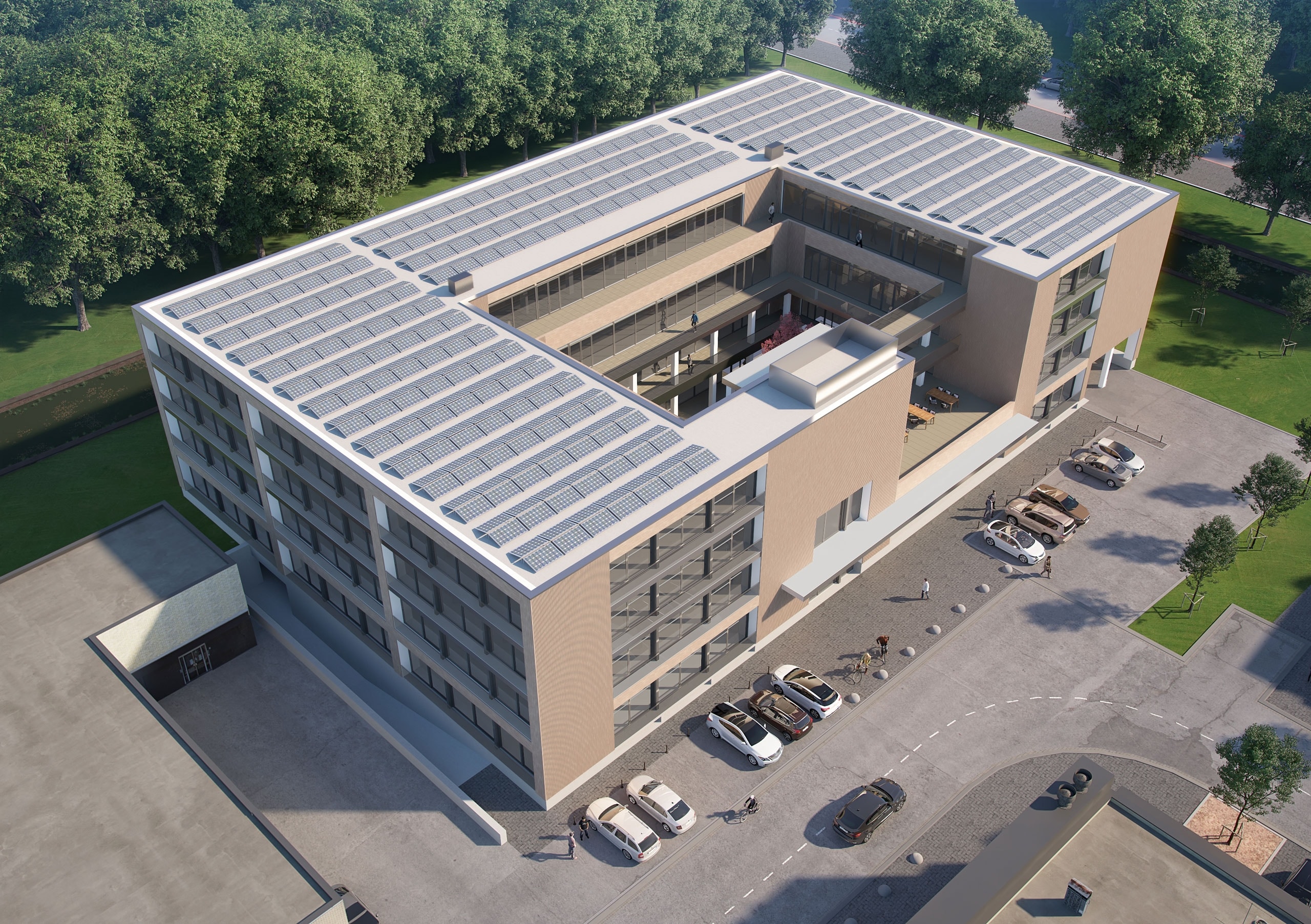
The project began with a simple but ambitious idea: reuse as much of the existing building as possible while creating a workplace that feels contemporary, open, and future-focused. The visualizations helped communicate how the new architecture would emerge from the existing structure, making the transformation easier to understand for both design discussions and external presentations.
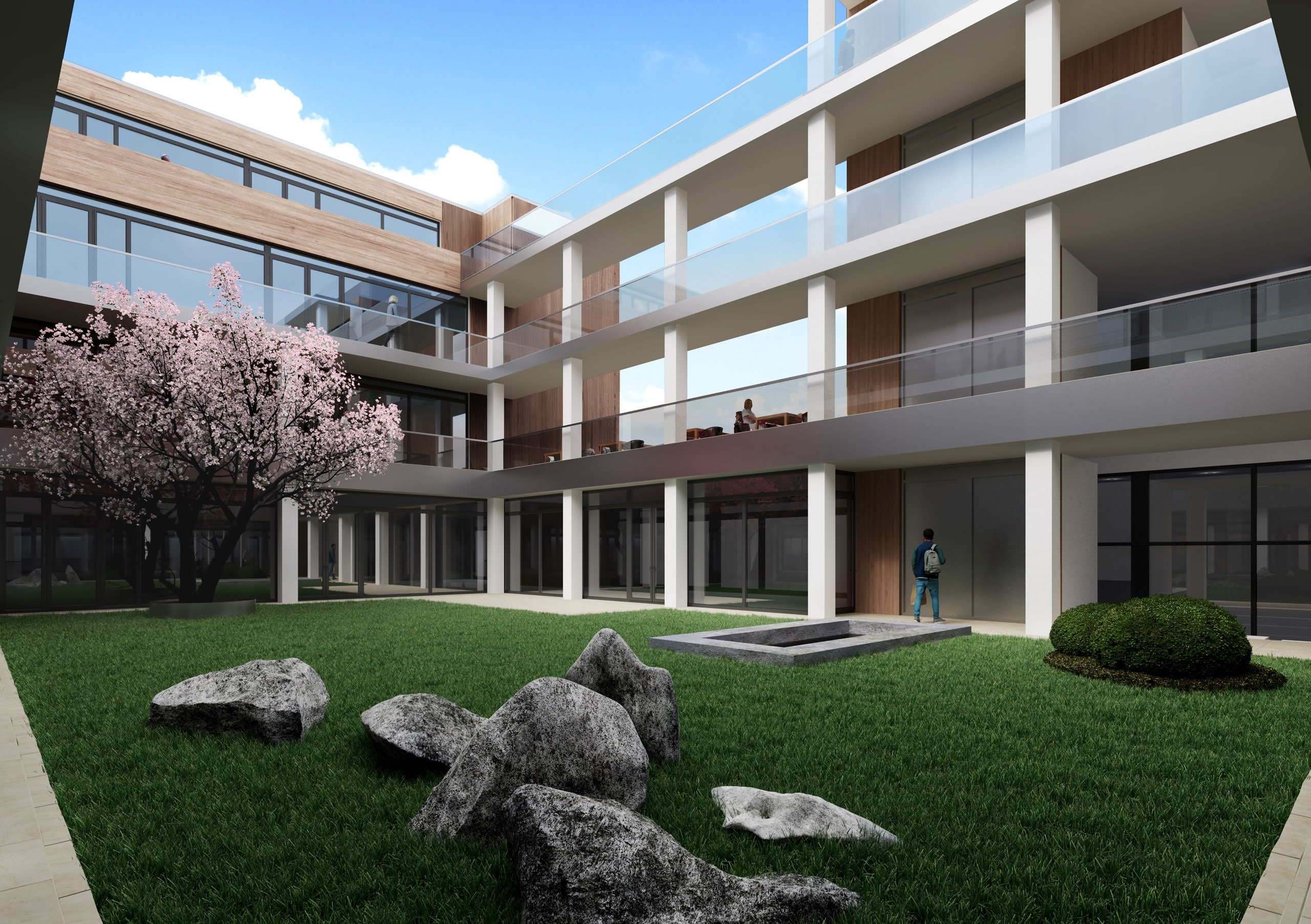
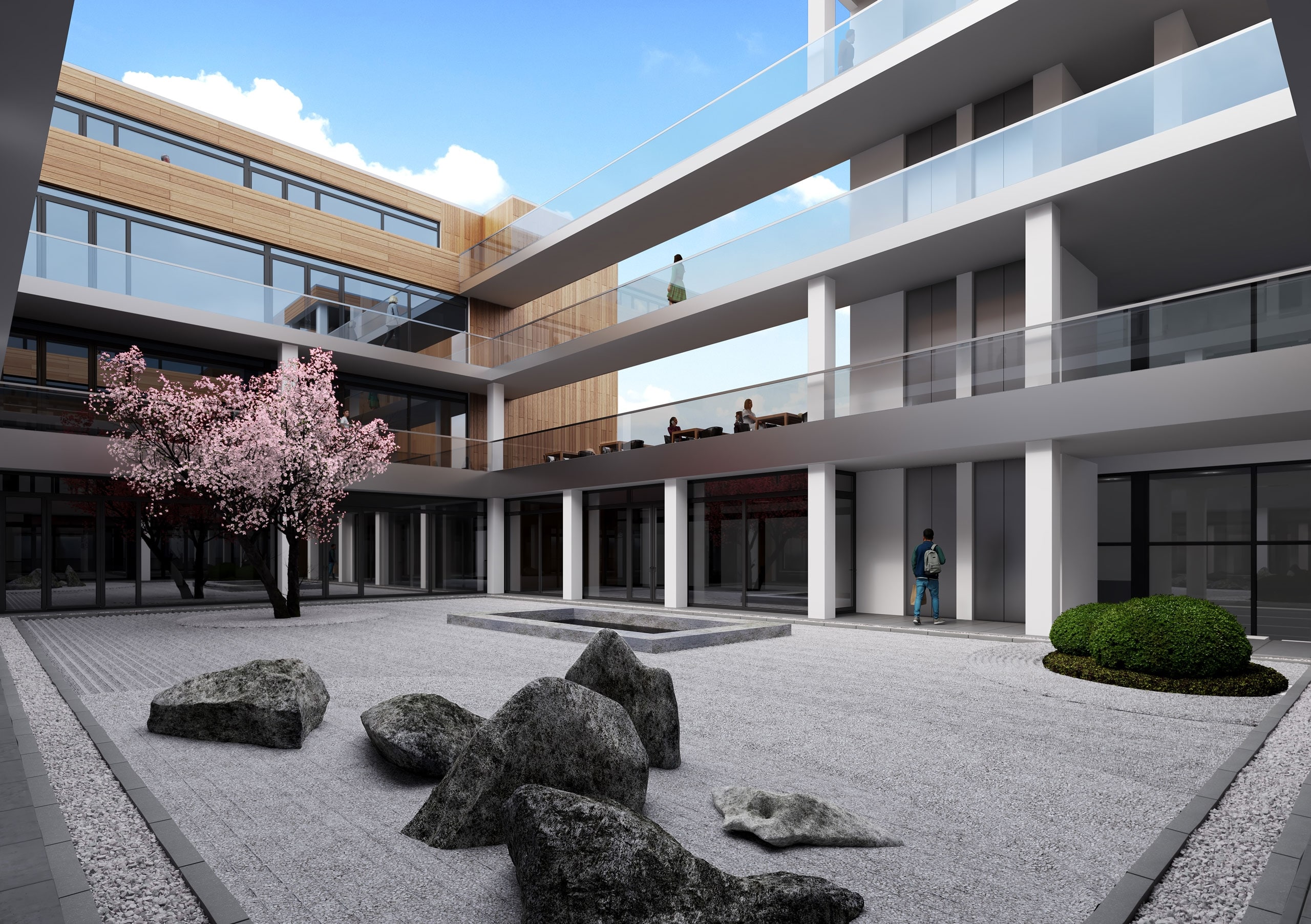

The central courtyard plays an important role in the character of the workplace. Rather than focusing solely on appearance, the design studies explored how different landscape strategies would influence the daily experience of the building. By visualizing multiple approaches side by side, the team could compare atmosphere, circulation, and the relationship between workspaces and outdoor space before key decisions were made.
The atrium view reveals how the project connects circulation, workplace functions, and landscape into a single experience. Looking across the galleries toward the courtyard, the design becomes easier to understand as a whole, showing how daylight, openness, and visual connectivity contribute to the everyday use of the building.
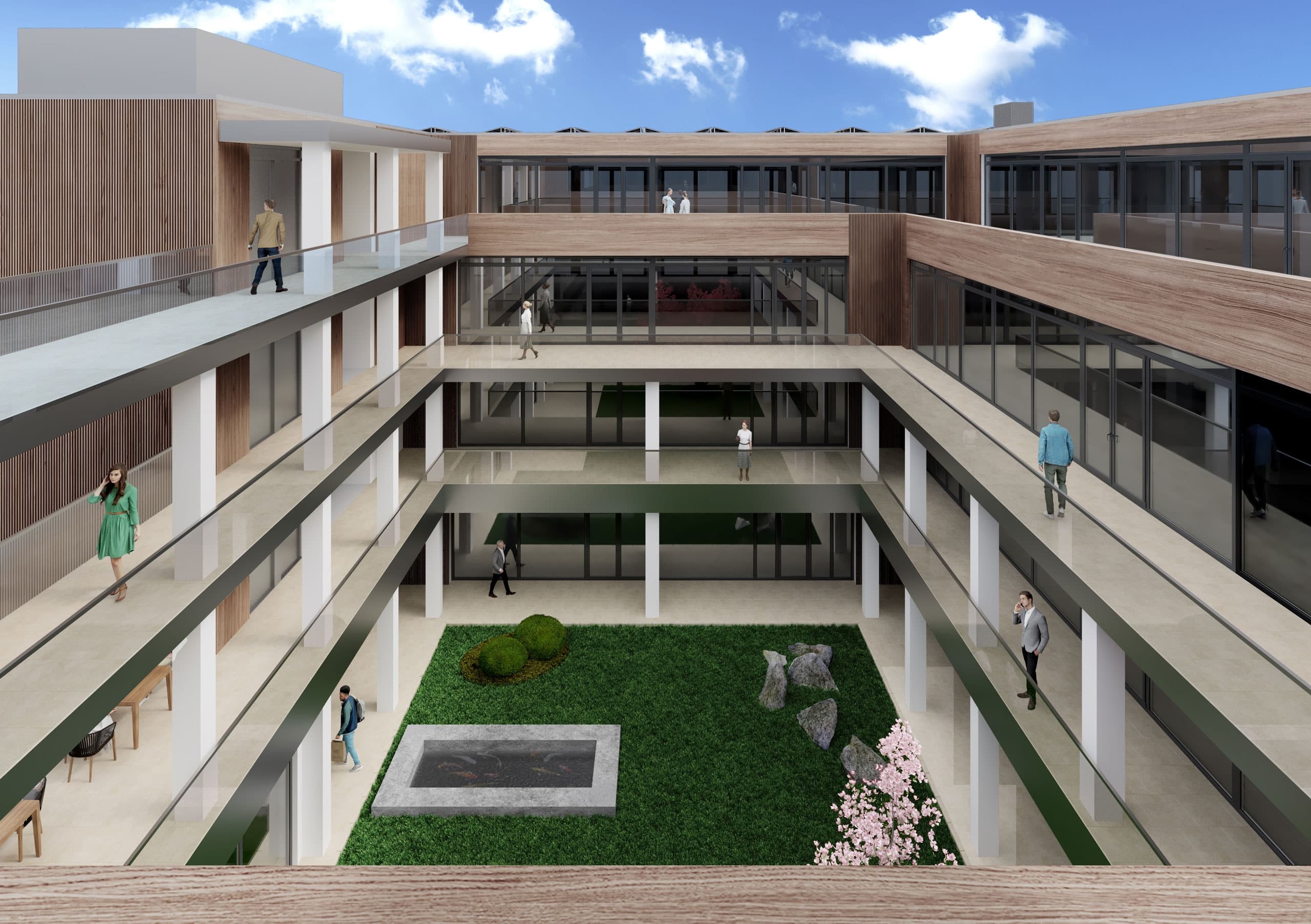
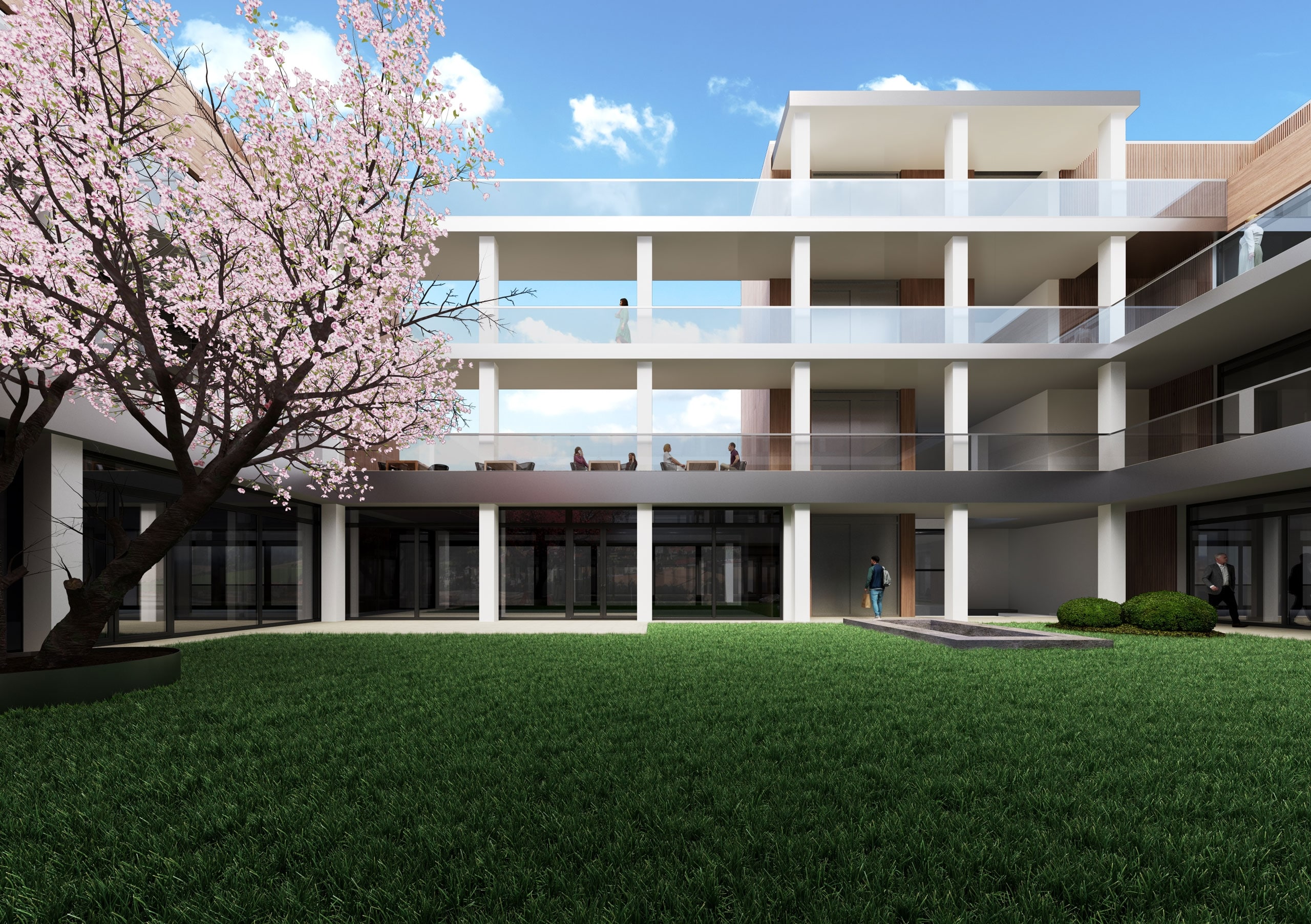
At ground level, the courtyard becomes the social heart of the development. More than a landscaped space between office wings, it helps define how people move through, meet within, and experience the workplace. The imagery was developed to communicate these relationships in a way that drawings alone could not fully convey.
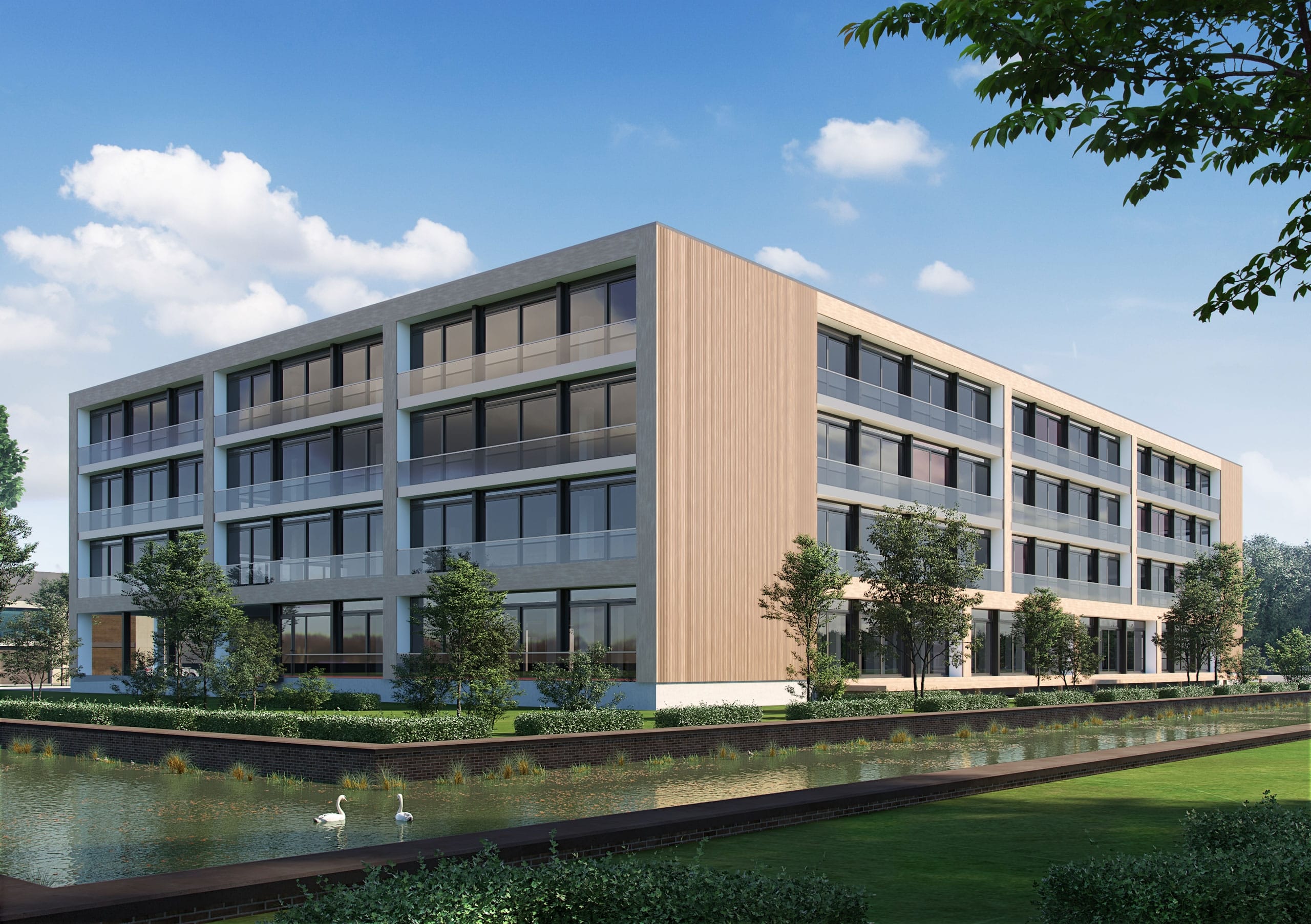
Viewed from the waterfront, the project demonstrates how circular thinking can influence not only construction methods but also architectural character. The composition of the building, its material expression, and its relationship to the surrounding landscape all contribute to a workplace that feels rooted in its context while looking toward the future.
Like what you see?
Let’s talk about how we can bring your vision to life.